
Savings
Daily Travel Budget by Country: What a Trip Actually Costs in 2026

Here's the thing about travel budgets: most of the numbers floating around online are either wildly outdated or based on someone's two-week hostel crawl in 2019.
The reality in 2026 looks different. Inflation hit some destinations hard. Exchange rates shifted. And that "$30 a day in Southeast Asia" promise? It needs a serious asterisk.
This guide breaks down what you'll actually spend per day in 30 countries — across budget, mid-range, and comfort tiers. Real numbers, updated for 2026, organized by region so you can plan with confidence instead of guesswork.
✈️ Lock in the best price on your next trip. Autopilot monitors flight and hotel prices after you book — if the price drops, we rebook you automatically. The average user saves $150+ per trip.
Master Daily Budget Table: 30 Countries at a Glance
All figures are per person, per day, in USD. "Budget" means hostels, street food, and public transit. "Mid-Range" means private rooms, sit-down restaurants, and occasional taxis. "Comfort" means boutique hotels, nicer dining, and guided experiences.
| Country | Budget | Mid-Range | Comfort | Currency | Best Value Months |
|---|---|---|---|---|---|
| Thailand | $30–45 | $70–100 | $150–220 | THB | Nov–Feb |
| Vietnam | $25–35 | $55–80 | $120–180 | VND | Mar–May, Sep–Nov |
| Indonesia (Bali) | $25–40 | $60–90 | $130–200 | IDR | Apr–Jun, Sep |
| Philippines | $35–45 | $70–100 | $150–250 | PHP | Jan–May |
| Cambodia | $25–35 | $50–80 | $100–170 | USD/KHR | Nov–Feb |
| Japan | $65–90 | $120–170 | $200–350 | JPY | Mar–May, Oct–Nov |
| South Korea | $55–75 | $100–140 | $180–280 | KRW | Apr–Jun, Sep–Oct |
| Taiwan | $50–70 | $90–130 | $170–250 | TWD | Mar–May, Sep–Nov |
| India | $15–35 | $40–70 | $90–160 | INR | Oct–Mar |
| Portugal | $55–75 | $100–130 | $170–250 | EUR | Mar–May, Sep–Oct |
| Greece | $50–70 | $90–130 | $160–240 | EUR | May–Jun, Sep–Oct |
| Czech Republic | $45–65 | $80–120 | $150–230 | CZK | Apr–Jun, Sep–Oct |
| Poland | $35–55 | $70–110 | $130–200 | PLN | May–Jun, Sep |
| Hungary | $40–55 | $75–105 | $140–210 | HUF | Apr–Jun, Sep–Oct |
| France | $70–100 | $130–190 | $220–350 | EUR | Apr–Jun, Sep–Oct |
| United Kingdom | $75–110 | $160–230 | $280–400 | GBP | Apr–May, Sep–Oct |
| Switzerland | $110–150 | $220–300 | $350–500+ | CHF | Apr–Jun, Sep–Oct |
| Norway | $100–140 | $180–250 | $300–450 | NOK | Jun–Aug |
| Iceland | $110–150 | $200–270 | $320–480 | ISK | Jun–Aug |
| Mexico | $35–55 | $70–110 | $140–220 | MXN | Nov–Apr |
| Colombia | $30–50 | $60–90 | $120–190 | COP | Dec–Mar, Jul–Aug |
| Peru | $30–45 | $55–90 | $110–180 | PEN | May–Sep |
| Argentina | $35–55 | $65–110 | $130–220 | ARS | Oct–Apr |
| Costa Rica | $45–70 | $90–150 | $180–280 | CRC | Dec–Apr |
| Turkey | $25–45 | $60–100 | $120–200 | TRY | Apr–Jun, Sep–Nov |
| Morocco | $30–50 | $70–120 | $140–230 | MAD | Mar–May, Sep–Nov |
| Egypt | $25–45 | $60–90 | $110–180 | EGP | Oct–Apr |
| Australia | $70–100 | $150–200 | $250–400 | AUD | Mar–May, Sep–Nov |
| New Zealand | $80–110 | $160–220 | $270–420 | NZD | Mar–May, Sep–Nov |
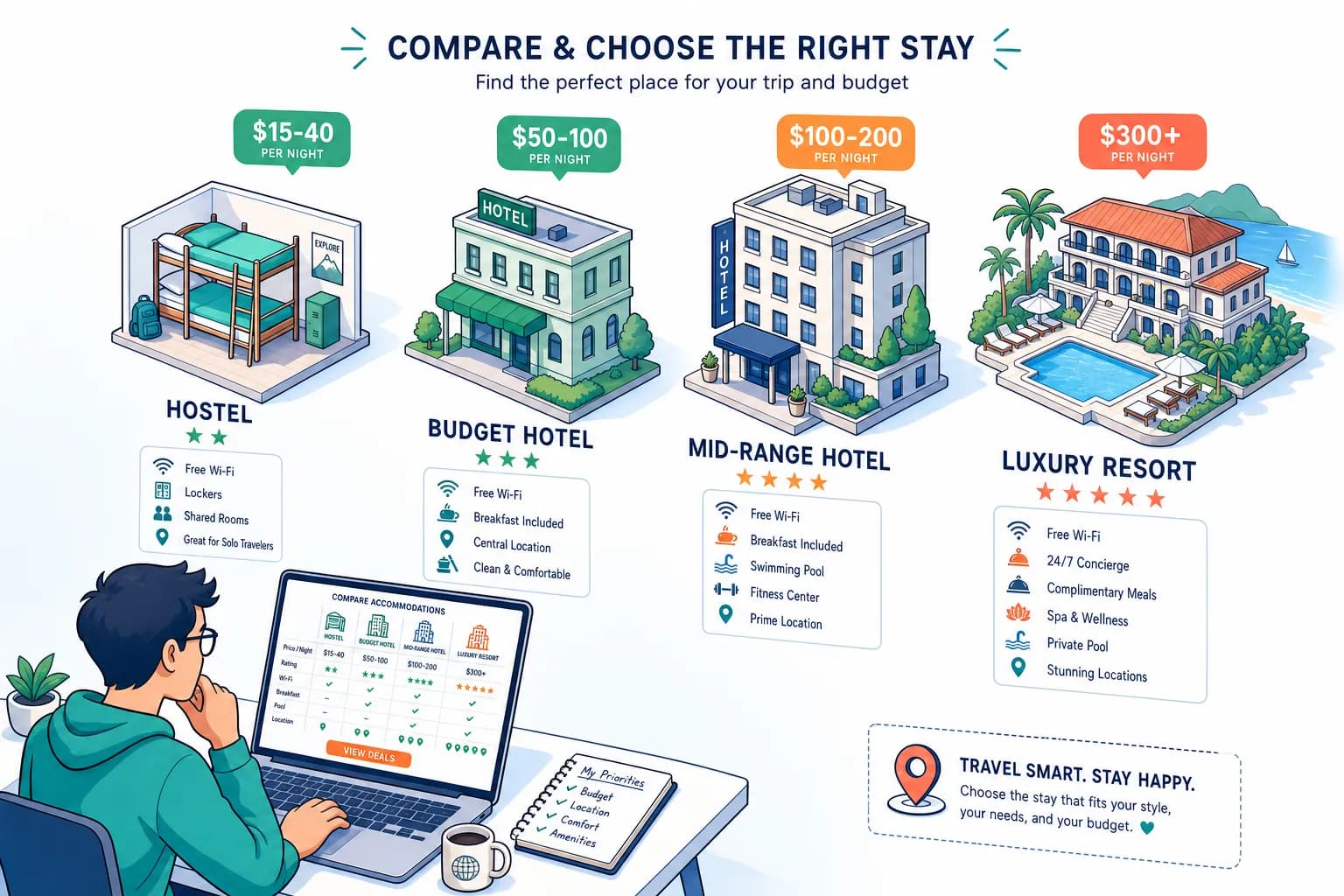
Southeast Asia: Still the Budget King (With Caveats)
Southeast Asia remains the most affordable region in 2026. But the days of $20 a day are largely behind us — at least if you want any comfort.
Vietnam is the standout value play. A bowl of pho costs $1.50. A private room in Hanoi or Da Nang runs $15–25. You can realistically eat three meals, sleep in a clean private room, take local transport, and visit a site for $35–40 a day.
Cambodia matches Vietnam on food prices (lok lak for $3, Angkor beer for $0.75) but accommodation quality is a step below. Siem Reap dorm beds run $5–8. The Angkor Wat pass is the biggest spike expense: $37 for one day.
Thailand is the most comfortable budget destination. Street food in Bangkok or Chiang Mai averages $1.50–3 per dish. But tourist-area accommodation has crept up — expect $20–35 for a decent private room in popular areas. The islands (Koh Samui, Phuket) cost 40–60% more than the mainland.
Indonesia splits between Bali and everywhere else. Bali's tourist corridor (Seminyak, Canggu, Ubud) runs $40–60 daily on a budget. Head to Java, Lombok, or Flores and you're back to $25–30.
The Philippines is the region's priciest, largely because of inter-island transport. Domestic flights between Cebu, Palawan, and Siargao add up fast. Budget $35–45 daily, with flights on top.
Budget Europe: Real Value Exists
Europe on a budget is doable in 2026. The gap between Western and Eastern Europe is still enormous.
Poland offers the strongest value in the EU. Krakow delivers world-class architecture and food at prices unthinkable in Paris. Lunch with beer runs $8–12. Private rooms go for $30–45.
Hungary is Budapest, basically. Ruin bars, thermal baths, and Danube views — all covered by a daily budget of $45–55. Public transit runs about $1.50 per ride.
Czech Republic lands just above Poland and Hungary. Prague has gotten pricier, but Cesky Krumlov and Brno deliver old-school budget Europe at $50–60 daily.
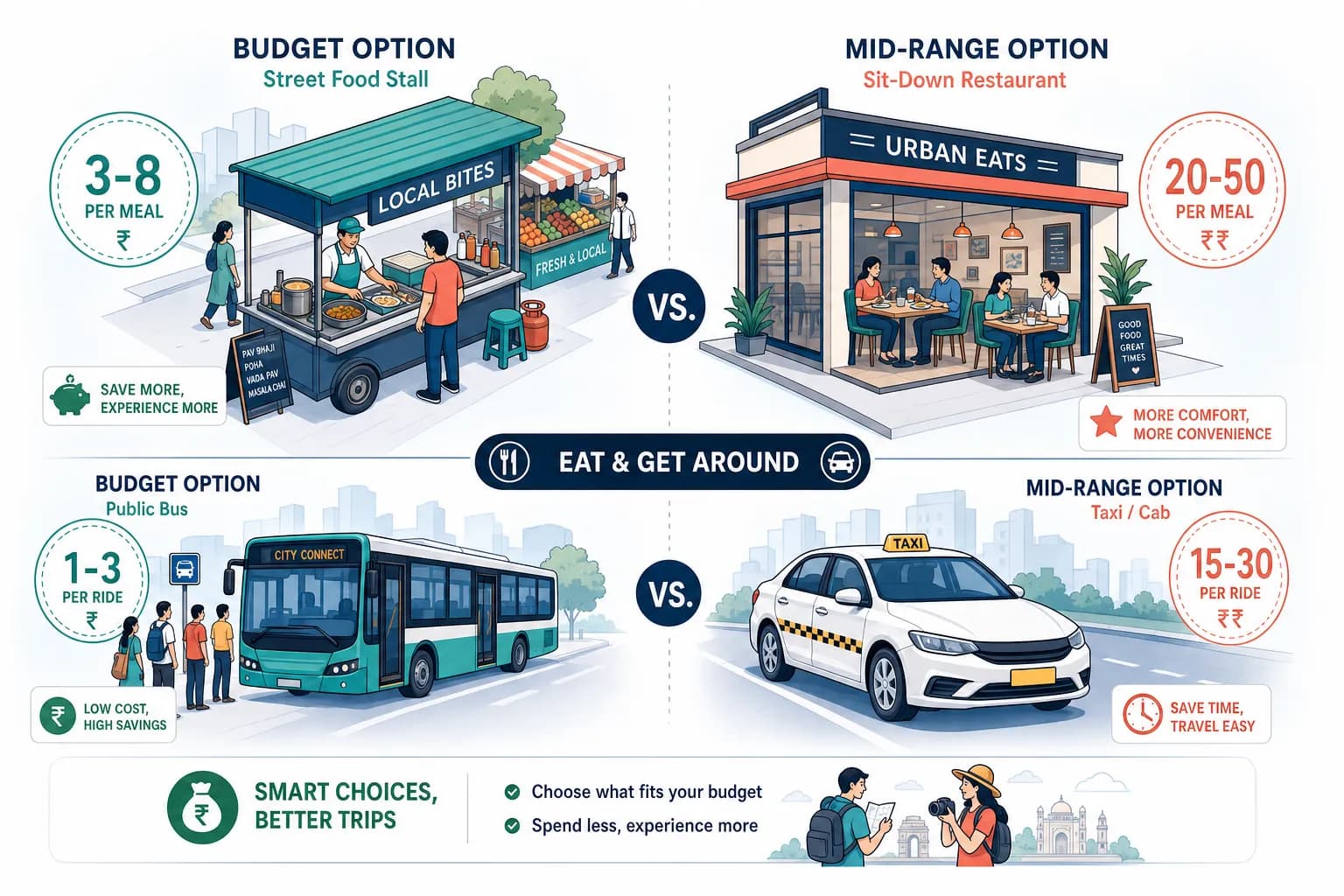
Portugal punches way above its weight. Lisbon and Porto feel like Western European capitals (because they are) but cost 30–40% less than Barcelona or Rome. The pastel de nata costs $1.20. A seafood dinner with wine runs $20–30. Budget travelers manage on $60–70 daily.
Greece remains affordable on the mainland and smaller islands. Athens is genuinely cheap for a European capital. The trick is island selection — Santorini and Mykonos will demolish any budget. Try Naxos, Milos, or Crete's south coast instead.
Expensive Europe: What to Expect
Switzerland is the most expensive country in Europe for travelers. A basic lunch costs $20–30. Budget accommodation (hostels) starts at $40–50 per night. Even budget travelers struggle to stay below $120 daily, and mid-range visitors should plan for $250+.
Norway and Iceland are right behind. Both hover around $110–150 daily for budget travelers. Grocery stores and cooking your own meals is essentially mandatory for anyone watching costs. The upside: much of the best scenery (fjords, waterfalls, hiking trails) is free.
The UK — specifically London — runs $75–110 daily on a budget. Outside London (Edinburgh, Bath, the Cotswolds), costs drop 20–30%. A London hostel bed averages $30–45 per night.
France is surprisingly manageable outside Paris. A week in Provence, the Loire Valley, or Alsace costs noticeably less than a week in the capital. Budget $70–100 daily on a tight plan, or $140–190 for mid-range comfort.
✈️ Found cheap flights to Europe? Book now and let Autopilot watch the price for you — if it drops after booking, we automatically rebook at the lower rate. That's money back in your travel budget.
Latin America: The Sweet Spot
Latin America offers the best balance of affordability, culture, and infrastructure in the world right now.
Colombia is the region's value king. Medellin's $3 set lunches and $15–25 private rooms make it possible to live well on $40–50 daily. Cartagena's Old City costs more at $55–70.
Peru matches Colombia on food prices but adds bucket-list draws. The catch: Machu Picchu entry costs $55+ and the train from Cusco adds $50–150. Budget $30–45 daily for general travel, with Machu Picchu as a spike.
Mexico spans a huge range. Mexico City and Oaxaca deliver incredible food and culture at $40–55 daily. The Riviera Maya (Tulum, Playa del Carmen) has crept firmly into mid-range territory at $70–100+ daily.
Argentina is the region's wild card. The peso's weakness means dollar-holders get exceptional purchasing power. Buenos Aires steak dinners run $15–25 for tourists. Budget $40–55 daily.
Costa Rica is Latin America's priciest mainstream destination — more developed and eco-tourism-oriented. Budget $50–70 daily; mid-range runs $90–150.
East Asia: Surprising Value
Japan has become significantly more affordable for Western travelers in 2026. The yen's weakness against the dollar means your money stretches further than it has in over a decade.
A 7-Eleven onigiri costs $1.20. A full ramen bowl runs $7–9. Budget accommodations (capsule hotels, hostels) go for $25–40. The Japan Rail Pass remains the single best transport investment: roughly $230 for 7 days of unlimited bullet train travel. Budget travelers can manage $65–90 daily.
South Korea is 15–20% cheaper than Japan across the board. Seoul's street food scene (tteokbokki, kimbap, hotteok) keeps meal costs at $5–10. Accommodation ranges from $25 goshiwon rooms to $80+ hotel rooms. Budget $55–75 daily.
Taiwan is the region's hidden gem. Night markets offer complete meals for $3–5. The MRT system in Taipei is world-class and cheap. Private rooms run $30–50. Budget $50–70 daily with room to spare for day trips.
Other Notable Destinations
India remains the cheapest major destination on Earth. Backpackers regularly report $15–25 daily costs. Street food meals cost $0.50–2. Budget guesthouses in Varanasi, Jaipur, or Goa run $5–15. The challenge isn't cost — it's navigating the intensity.
Turkey is 2026's best-value "in-between" destination. The lira's weakness means Istanbul, Cappadocia, and the coast deliver European-quality experiences at prices closer to Southeast Asia. Budget $30–45 daily. A full kebab meal runs $3–5.
Morocco offers a complete sensory experience at budget prices. Marrakech riads (guesthouses) start at $20–30 for private rooms. Tagine dinners cost $4–8 in the medina. Budget $35–50 daily.
Egypt is rock-bottom affordable outside the big-ticket archaeological sites. Street food and local restaurants keep meal costs at $3–7 daily. Budget $30–45 daily, with pyramids and temple entry fees as spike costs.
Australia and New Zealand are the most expensive destinations in this guide outside of Scandinavia and Switzerland. Budget $75–110 daily in Australia, $85–115 in New Zealand. Both reward campervan travel and self-catering heavily.
What Your Daily Budget Actually Covers
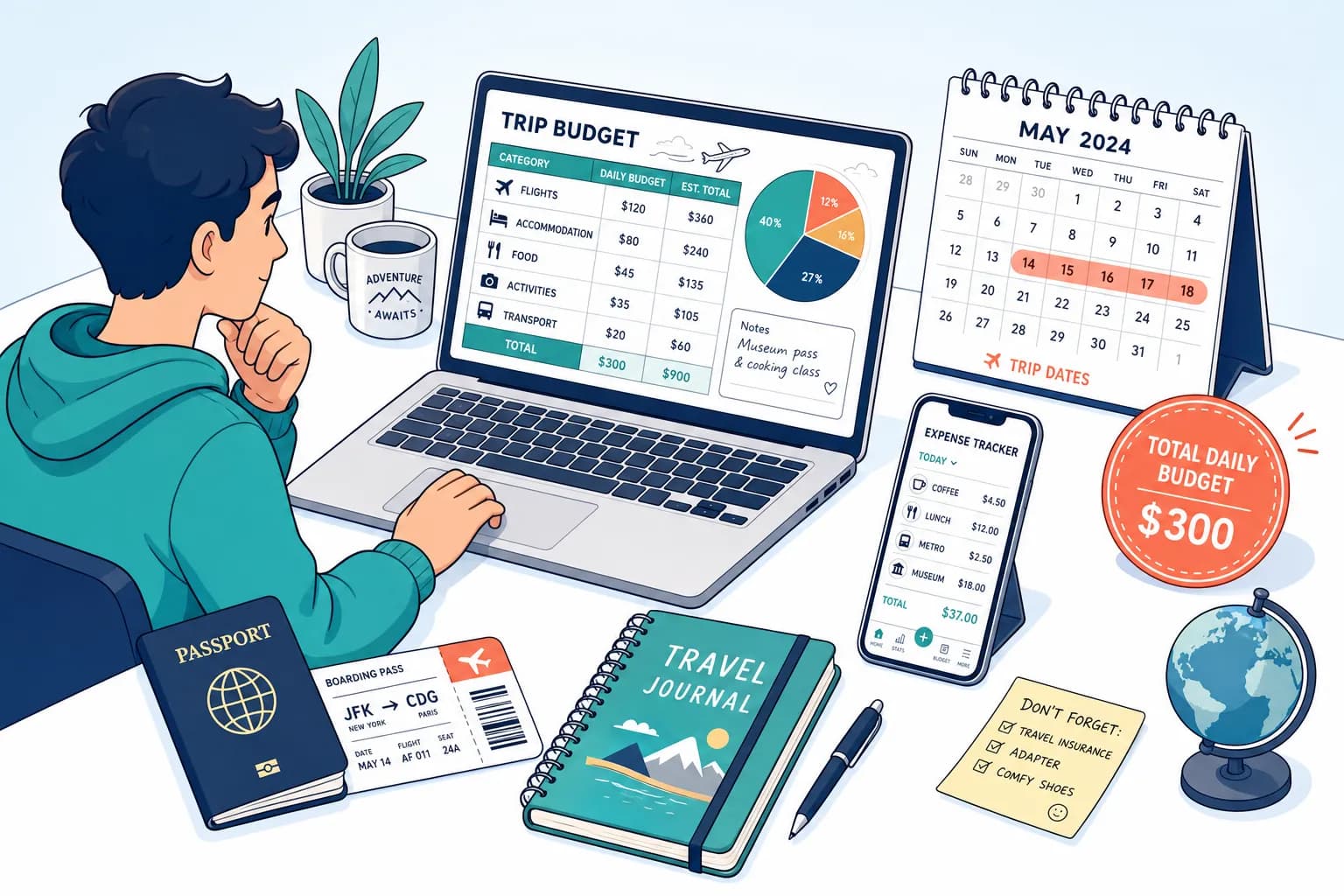
When we say "daily budget," here's how that money typically breaks down:
- Accommodation (40%): Your single biggest daily expense. This ranges from $5 hostel dorms in Cambodia to $50+ in Scandinavian cities.
- Food (25%): Three meals plus snacks and drinks. Street food destinations (Vietnam, Mexico, India) skew this lower; restaurant-heavy destinations (France, Japan) push it higher.
- Transport (15%): Local buses, metro, tuk-tuks, and occasional taxis. Domestic flights (Philippines, Indonesia) can blow this category wide open.
- Activities (15%): Museum entries, tours, national park fees, and excursions. Some of the most expensive line items fall here — Machu Picchu, Angkor Wat, and Great Barrier Reef tours can cost more than an entire day's budget elsewhere.
- Miscellaneous (5%): SIM cards, laundry, tips, and the occasional impulse purchase. Always budget a buffer.
Quick Budget-Stretching Tips by Region
This post is a reference guide, not a tips article — but a few region-specific tactics are worth noting.
Southeast Asia: Eat where locals eat. If the menu is in English only, you're paying 2–3x the local price. Night markets consistently offer the best food-to-dollar ratio.
Europe: Travel in shoulder season (May or September) and your costs drop 20–40% compared to July. Apartment rentals with kitchens save 30% on food costs versus eating every meal out.
Latin America: The "menu del dia" set lunch is your best friend. In Colombia, Peru, and Ecuador, thesefilling multi-course meals run $3–5 and are what locals actually eat.
East Asia: Convenience stores in Japan, South Korea, and Taiwan are genuinely great for cheap, quality meals. 7-Eleven in Tokyo is better than most restaurants in some cities.
2026-Specific Notes: What Changed This Year
The weak yen continues to make Japan a bargain. The Japanese yen remains historically weak against the dollar and euro, making 2026 one of the best-value windows for visiting Japan in the past 15 years. Tokyo and Kyoto — once prohibitively expensive — now compete with Seoul and Taipei on daily costs.
Turkey and Argentina benefit from currency dynamics. Both countries have seen their currencies weaken significantly against the dollar. For travelers earning in USD, EUR, or GBP, this translates to exceptional purchasing power on the ground.
Europe's summer premium is larger than ever. Post-pandemic tourism surges haven't slowed down. July and August pricing in popular European destinations runs 30–50% above shoulder-season rates. Shifting your trip by even two weeks into September makes a material difference.
Southeast Asia has seen modest inflation. Popular destinations like Bali and Bangkok have crept up 10–15% over the past two years. The region remains affordable, but the mythical "$20 a day" figures from travel forums are no longer realistic for most visitors.
The USD holds strong globally. The dollar's relative strength in 2026 means American travelers get slightly better value almost everywhere compared to 2023–2024. European travelers heading to the US will feel the pinch in the opposite direction.
✈️ Ready to book? Sign up for Autopilot and we'll track your flights and hotels after purchase — rebooking automatically when prices drop. Most users save $150+ without lifting a finger.
Frequently Asked Questions
What is the cheapest country to travel in 2026?
India is the cheapest major travel destination, with budget travelers regularly spending $15–25 per day. Vietnam, Cambodia, and Egypt also offer extremely low daily costs in the $25–35 range. For the best combination of affordability and tourist infrastructure, Vietnam is hard to beat.
How much does it cost to travel Europe per day?
It varies enormously by country. Eastern Europe (Poland, Hungary, Czech Republic) runs $40–65 daily on a budget. Western Europe (France, Spain, Italy) averages $70–110. Scandinavia and Switzerland can exceed $120–150 daily even for budget travelers. Shoulder season (May, September) cuts costs by 20–40%.
Is $50 a day enough to travel?
In much of Southeast Asia, South Asia, Latin America, Turkey, Morocco, and Egypt — absolutely. You can travel comfortably on $50 a day in countries like Thailand, Colombia, Peru, and Vietnam. In Western Europe, Japan, or Australia, $50 a day would require serious sacrifices.
Do these daily budgets include flights?
No. All daily budget figures in this guide cover on-the-ground costs only: accommodation, food, local transport, activities, and miscellaneous expenses. International airfare and travel insurance are separate budget line items.
How much should I budget for a two-week trip to Southeast Asia?
On a budget tier, plan for $500–700 total for 14 days ($35–50/day). Mid-range comfort runs $1,000–1,400. This covers accommodation, food, transport, and activities. Add international flights ($400–900 round trip from the US) and travel insurance ($50–80) separately.
Is Japan expensive to visit in 2026?
Less than you'd think. The weak yen has made Japan significantly more affordable for Western travelers. Budget visitors can manage $65–90 daily using capsule hotels, convenience store meals, and the Japan Rail Pass. Mid-range travelers spend $120–170 daily. It's no longer the budget-buster it once was.
What is the best time of year to travel on a budget?
Shoulder season — the weeks just before and after peak tourist season — offers the best value almost everywhere. For Europe, that means May or September. For Southeast Asia, March through May. Prices for accommodation, flights, and even activities can drop 20–50% compared to peak months.
Should I carry cash or use cards when traveling internationally?
Both. Many budget destinations (Vietnam, Cambodia, Morocco, India) are still heavily cash-based, especially for street food and local transport. Carry a no-foreign-transaction-fee credit card for hotels and larger purchases, and withdraw local currency from ATMs as needed. Always have some USD or EUR as backup in developing countries.
Disclaimer: The daily budget figures in this guide are estimates based on publicly available data, travel cost aggregators, and traveler reports current as of June 2026. Actual costs vary based on travel style, season, specific cities visited, and exchange rate fluctuations. Prices are quoted in USD and may change. This guide is for informational purposes only and does not constitute financial advice. Always research current conditions and build a buffer into your travel budget.
The Autopilot Crew
Keep reading
Google Flights Price Guarantee: How the Payout Works
The Google Flights price guarantee pays you the difference if a badged fare drops before takeoff. The rules, the $500 cap, and what ends it.
Capital One Travel Price Match and Price Drop Protection
Capital One Travel price match pays a travel credit if you find a lower fare within 24 hours. Price drop protection is separate, automatic, and capped.
FareTracker Alternatives: Track Your Fare After You Book
FareTracker alternatives compared, from Going's Price Drop to Autopilot: who rebooks when your fare falls after you book, what each costs, and which fits.